The short version
- Put a three-foot wood-chip or gravel border between lawn and woods.
- Mow often and clear brush at the edges.
- Keep play sets, decks and patios away from the tree line.
Start at the edge
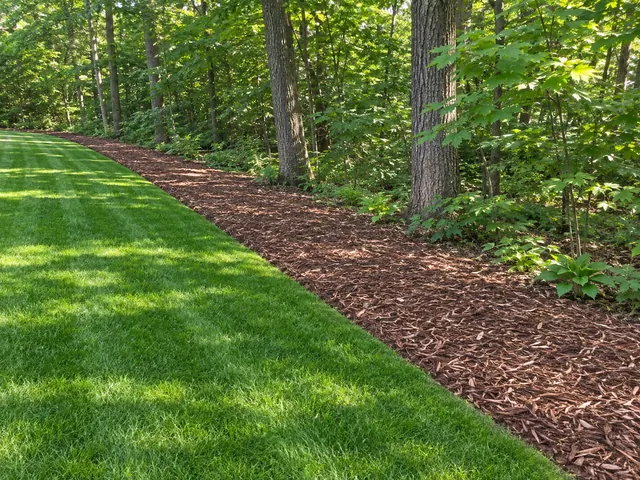
Ticks wait in tall grass and brush, and the densest of both is where your lawn meets the woods. The CDC recommends two things there: clear the tall grasses and brush, and place a three-foot-wide barrier of wood chips or gravel between the lawn and the wooded area.
The border does two jobs. It marks a line your family learns to notice, and it puts a dry, exposed strip between the woods and the grass.
TruMulch delivers and installs mulch and delivers gravel, so either kind of border is one order away.
Keep the lawn short
Mow frequently. Short grass is drier and more exposed. If mowing is the chore that slips, Mow Trim Blow will keep it on a schedule.
Tidy the places ticks and their hosts shelter
- Stack wood neatly and in a dry area.
- Remove old furniture, mattresses and trash from the yard.
- Cut back overgrown shrubs and brush near the house. Shrub Trimmers handles this.
- Consider fencing to keep out deer, raccoons and stray dogs, which carry ticks in.
Put the living areas in the open
Keep playground equipment, decks and patios away from yard edges and trees, the CDC advises. If you are planning a new deck or patio, the sunny middle of the yard is a better site than the shaded corner by the woods. Trex-Decks can help with placement.
Check after time outdoors
The CDC recommends showering within two hours of coming indoors and doing a full-body check: under the arms, in and around the ears, inside the belly button, behind the knees, in and around the hair, between the legs and around the waist. Check children, pets and gear too.
Add the barrier
Landscaping reduces the cover. A barrier blast treats what is left: the shrubs, the ground cover and the perimeter where ticks wait.